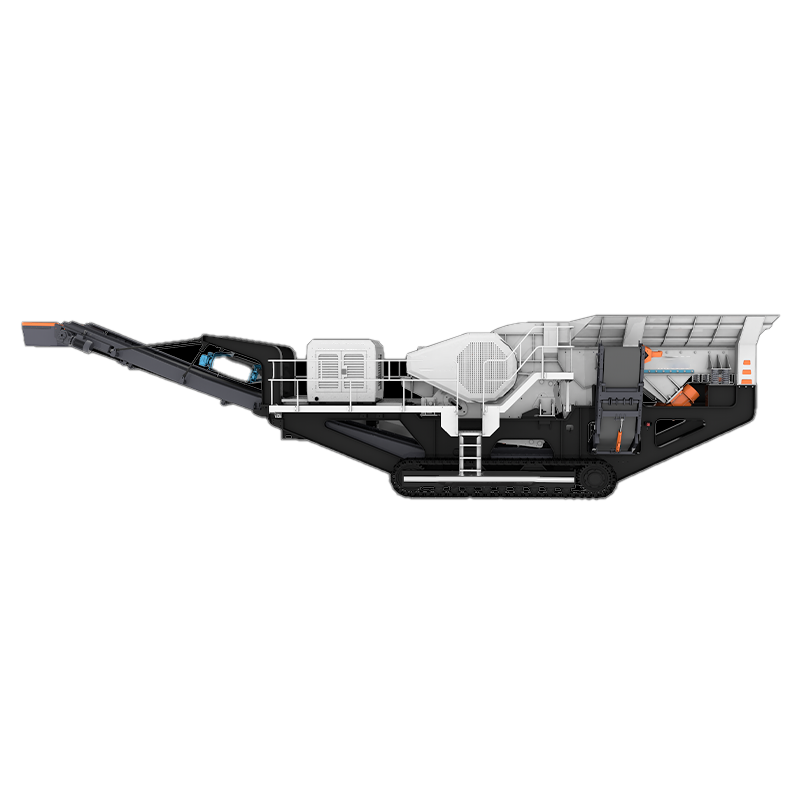
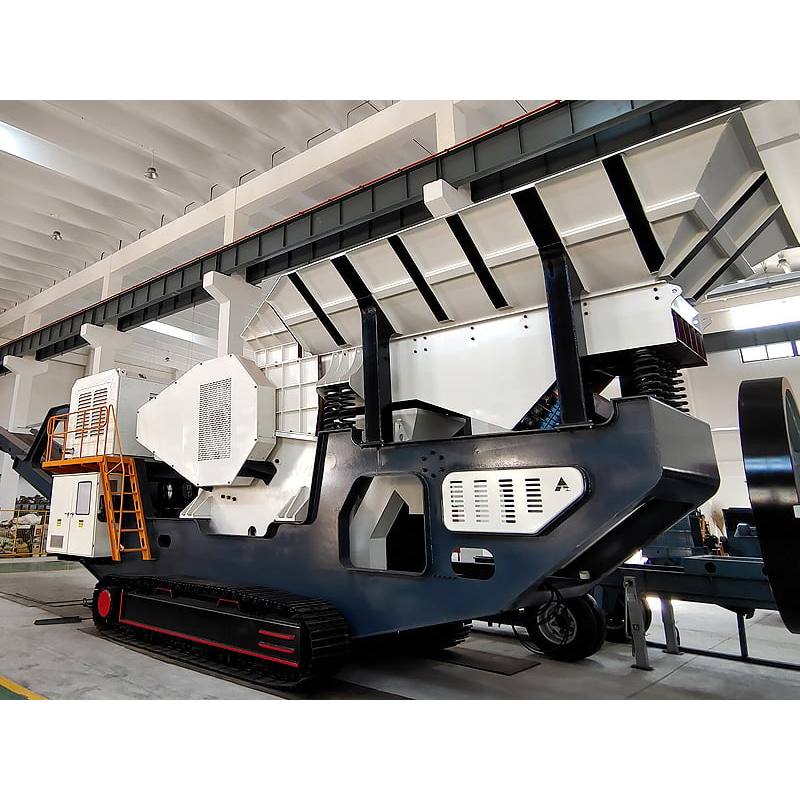
The tire jaw crusher station, also known as the tire-type crusher or the hydraulic-driven tire-type mobile crushing station, is a highly efficient crushing equipment. It adopts a self-driven mode, featuring advanced technology and complete functions. It has excellent mobility during work station movement and adaptability to the working site. There is no need for various […]
The tire jaw crusher station, also known as the tire-type crusher or the hydraulic-driven tire-type mobile crushing station, is a highly efficient crushing equipment. It adopts a self-driven mode, featuring advanced technology and complete functions. It has excellent mobility during work station movement and adaptability to the working site. There is no need for various preparatory work before the fixed-type crushing station is installed and positioned. It can complete the adjustment of the work station in a short time and enter the working state at any time.
Applicable materials: granite, marble, basalt, limestone, quartz stone, river pebbles, copper ore, iron ore, etc.
Application fields: Construction engineering, highway and railway engineering, water conservancy projects, mining operations.
Product Features
High Mobility Compared with traditional fixed jaw crushers, the tire jaw crusher station is equipped with a tire chassis, enabling it to move and transfer quickly between different construction sites, with strong adaptability.
Integrated Design With an integrated design, the jaw crusher, feeder, vibrating feeder, conveyor, and other key equipment are integrated onto one or several trailers, making operation and management more convenient.
Simple and Quick Setup The installation and disassembly process of the tire jaw crusher station is relatively simple, facilitating the rapid relocation and deployment of the equipment, and saving a significant amount of installation time and costs.
High Efficiency and Energy Conservation The equipment operates stably, featuring high crushing efficiency and production capacity. At the same time, it adopts advanced energy-saving technologies, which can effectively reduce energy consumption and operational costs.
Working Principle
Feeding Process: Raw materials are fed into the crushing station system through vibrating feeders or belt feeders. These feeding devices can evenly distribute the raw materials to the crushing main machine, ensuring the efficient operation of the crushing process.
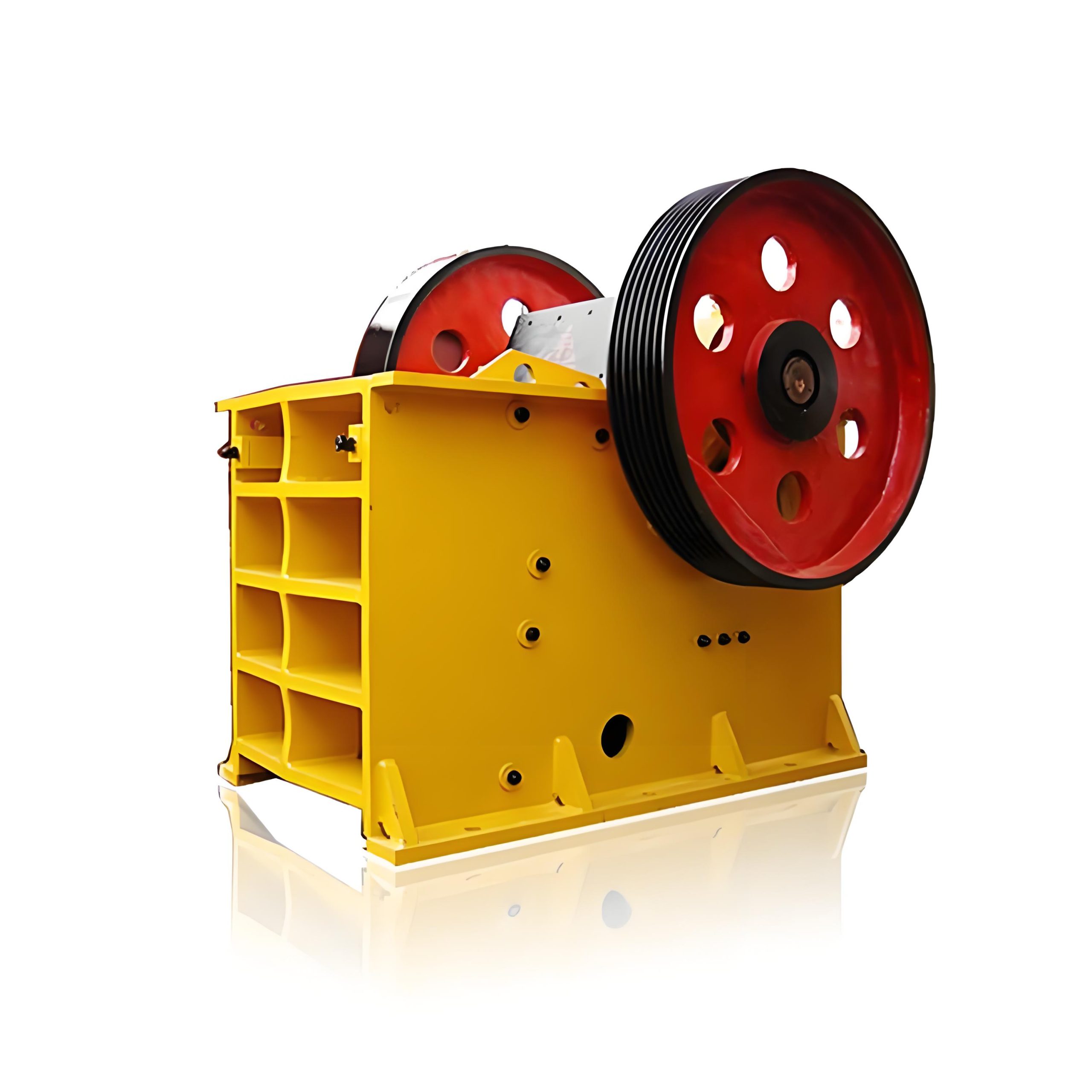
Crushing Process: The raw materials enter the crushing machine. Depending on the specific type of crushing equipment (such as jaw crushers, cone crushers, impact crushers, etc.), the raw materials are crushed into the desired particle size through the jaw plates, conical shells, or high-speed impacts.
Screening Process: The crushed materials are conveyed by a conveyor belt to a vibrating screen for screening. The vibrating screen separates the materials into different particle sizes based on their granularity. Coarse materials may be sent back to the crushing machine for secondary crushing to ensure the quality of the final product.
Transportation Process: The sorted finished materials are transported to the storage area or other subsequent processing equipment through the conveyor belt system. The conveyor belt system is responsible for the transportation of raw materials and finished products throughout the entire workflow, ensuring a continuous production process.
Automation Control and Regulation: Tire-type mobile crushing stations are usually equipped with advanced automated control systems. These systems can monitor the operating status of the equipment and the flow of materials in real time. They can adjust the feeding speed, crusher parameters, and conveyor belt speed as needed to maximize production efficiency and product quality.
Mobility and Flexibility: The entire crushing station is designed as a mobile structure and is installed on a tire chassis. This enables the crushing station to be quickly moved to different work sites, adapting to various crushing requirements and project specifications, thereby enhancing the flexibility and operational efficiency of the construction site.
Technical Parameters Table
Technical Parameters Table
Model
YG0830E4060
YG0830E5075
YG9538E6090
YG1149E75110
YG1249E86110
Feeder Model
GZD0830
GZD0830
GZD9538
GZD1149
GZD1149
Crusher Model
PEV400×600
PEV500×750
PEV600×900
PEV750×1100
PEV860×110
Magnetic Separator Model (Optional)
RCYD(C)-5
RCYD(C)-6.5
RCYD(C)-8
RCYD(C)-10
RCYD(C)-12
Tire Configuration
Tandem Dual Axle
Tandem Dual Axle
Tandem Dual Axle
Tandem Triple Axle
Tandem Triple Axle
Main Conveyor Model
B500×8.5m
B650×8.5m
B800×8.5m
V1000×10m
B1200×10m
Main Conveyor Discharge Height (mm)
3000
3000
3000
3200
3200
Side Discharge Conveyor Model (Optional)
B500×4m
B650×4m
B500×4m
B650×5m
B650×5m
Side Conveyor Discharge Height (mm)
2800
2800
2800
3100
3100
Generator Power (kW) (Optional)
80
120
160
200
250
Transport Length (mm)
9700
10500
11900
13100
14600
Transport Width (mm)
2550
2550
2550
2550
2550
Transport Height (mm)
3650
3800
4000
4300
4500
Working Length (mm)
9700
10500
11900
13100
14600
Working Width (mm)
2550
2550
2900
2950
3300
Working Height (mm)
4060
4200
4400
4810
5300
Weight (t)
17
28
39
57
65
* The above data is for reference only. For specific information, please refer to the actual product or product manual.