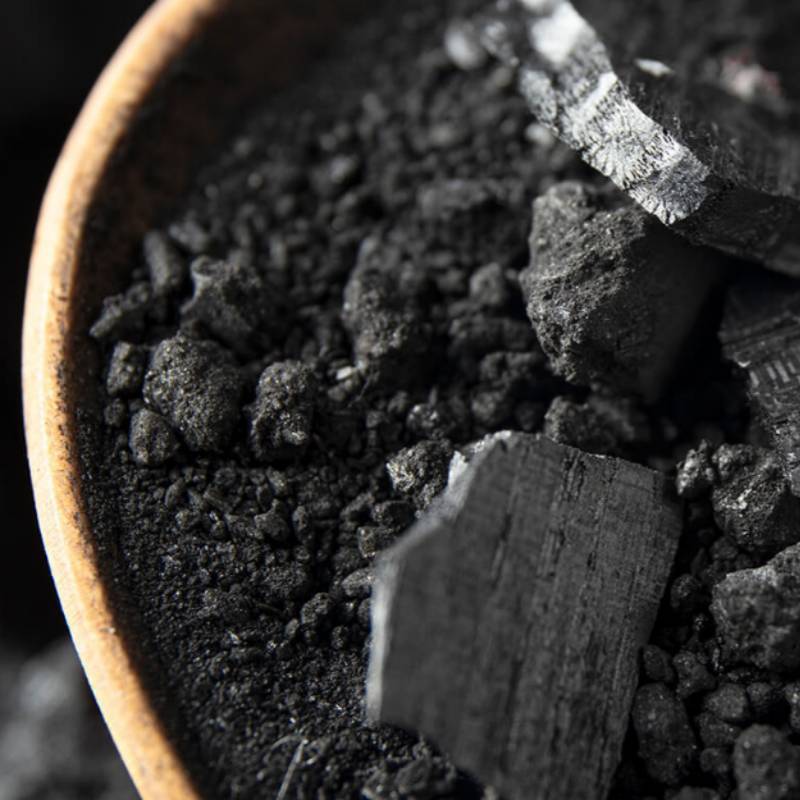
A vital component in making many of the products we use every day stronger, deeper in color and longer lasting, carbon black in its pure form is a fine black powder, essentially composed of elemental carbon. It is produced by partial burning and pyrolysis of low-value oil residues at high temperatures under controlled process conditions.
Carbon black is mainly used to strengthen rubber in tires, but can also act as a pigment, UV stabilizer, and conductive or insulating agent in a variety of rubber, plastic, ink and coating applications. Apart from tires, other everyday uses of carbon black include hoses, conveyor belts, plastics, printing inks and automotive coatings.
The fundamental properties of carbon black determine application performance
For specialty carbon black grades, a finer particle diameter translates to a larger specific surface area and superior tinting strength. Carbon black with a high surface area typically delivers deeper jetness, enhanced electrical conductivity, and better weather resistance. Nevertheless, it also raises system viscosity and demands greater energy input to achieve uniform dispersion.
In rubber compounding, fine carbon black particles deliver prominent reinforcing effects, significantly boosting abrasion resistance and tensile strength. However, finer particles require longer mixing cycles and higher energy consumption to ensure thorough dispersion. Furnace carbon blacks generally feature particle sizes ranging from 8 nanometers to 100 nanometers. Within the industry, specific surface area is widely adopted as a core indicator of carbon black fineness and corresponding particle size.
STRUCTURE
Highly structured carbon blacks provide higher viscosity, greater electrical conductivity and easier dispersion for specialty carbon blacks. Measures of aggregate structure may be obtained from shape distributions from EM analysis, oil absorption (OAN) or void volume analysis.
The structure level of a carbon black ultimately determines its effects on several important in-rubber properties. Increasing carbon black structure increases modulus, hardness, electrical conductivity, and improves dispersibility of carbon black, but increases compound viscosity.
SURFACE CHEMISTRY OR SURFACE ACTIVITY
This is a function of the manufacturing process and the heat history of a carbon black and generally refers to the oxygen-containing groups present on a carbon black’s surface.
For specialty carbon blacks, oxidized surfaces improve pigment wetting, dispersion, rheology, and overall performance in selected systems. In other cases, oxidation increases electrical resistivity and makes carbon blacks more hydrophilic. The extent of surface oxidation is measured by determining the quantity of the “volatile” component on the carbon black. High volatile levels are associated with low pH.
While difficult to measure directly for rubber, surface chemistry manifests itself through its effects on such in-rubber properties as abrasion resistance, tensile strength, hysteresis, and modulus. The effect of surface activity on cure characteristics will depend strongly on the cure system in use.
PHYSICAL FORM
This is important in matching a carbon black to the equipment by which it is to be dispersed. The physical form (beads or powder) can affect the handling and mixing characteristics.
The ultimate degree of dispersion is also a function of the mixing procedures and equipment used. Powdered carbon blacks are recommended in low-shear dispersers and on three-roll mills. Beaded carbon blacks are recommended for shot mills, ball mills, and other high energy equipment. Beading provides lower dusting, bulk handling capabilities, and higher bulk densities, while powdered carbon blacks offer improved dispersibility.
Carbon Black Fineness Processing with the Raymond Mill
The Raymond mill is primarily utilized for the coarse to medium-fine grinding of carbon black powder, typically covering a fineness range of 80 to 400 mesh. Characterized by its simple structure, stable operation, low maintenance costs, and long service life, this equipment is ideally suited for processing standard filler-grade carbon black where strict requirements regarding fineness are not a primary concern.
Thanks to its moderate grinding fineness, the Raymond mill offers excellent economic efficiency while simultaneously ensuring high production output, making it the ideal choice for basic carbon black powder processing applications.
Carbon Black Fineness Achieved by Ring-Roller Mills
The ring-roller mill is capable of grinding carbon black powder to an extremely fine particle size, reaching a maximum fineness of up to 2500 mesh. Characterized by low energy consumption and high production efficiency, this equipment is ideally suited for processing high-blackness carbon black. It is primarily utilized in sectors—such as inks and coatings—that demand exceptionally high standards regarding color depth and dispersibility.
Through processing with a ring-roller mill, the carbon black achieves uniform particle size and a large specific surface area, thereby enhancing the gloss, opacity, and adhesion properties of the final products.