Working Principle Analysis: Raymond Mill and Vertical Mill
Working Principle of Raymond Mill
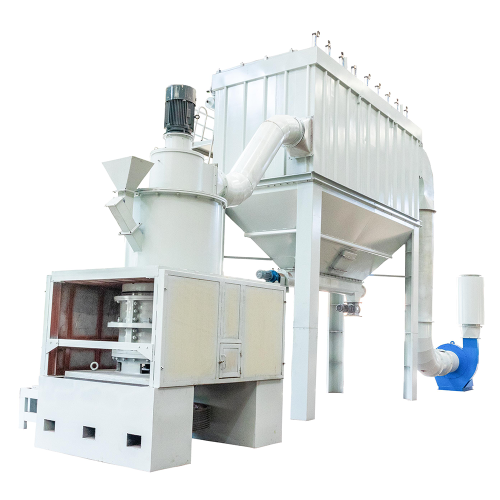
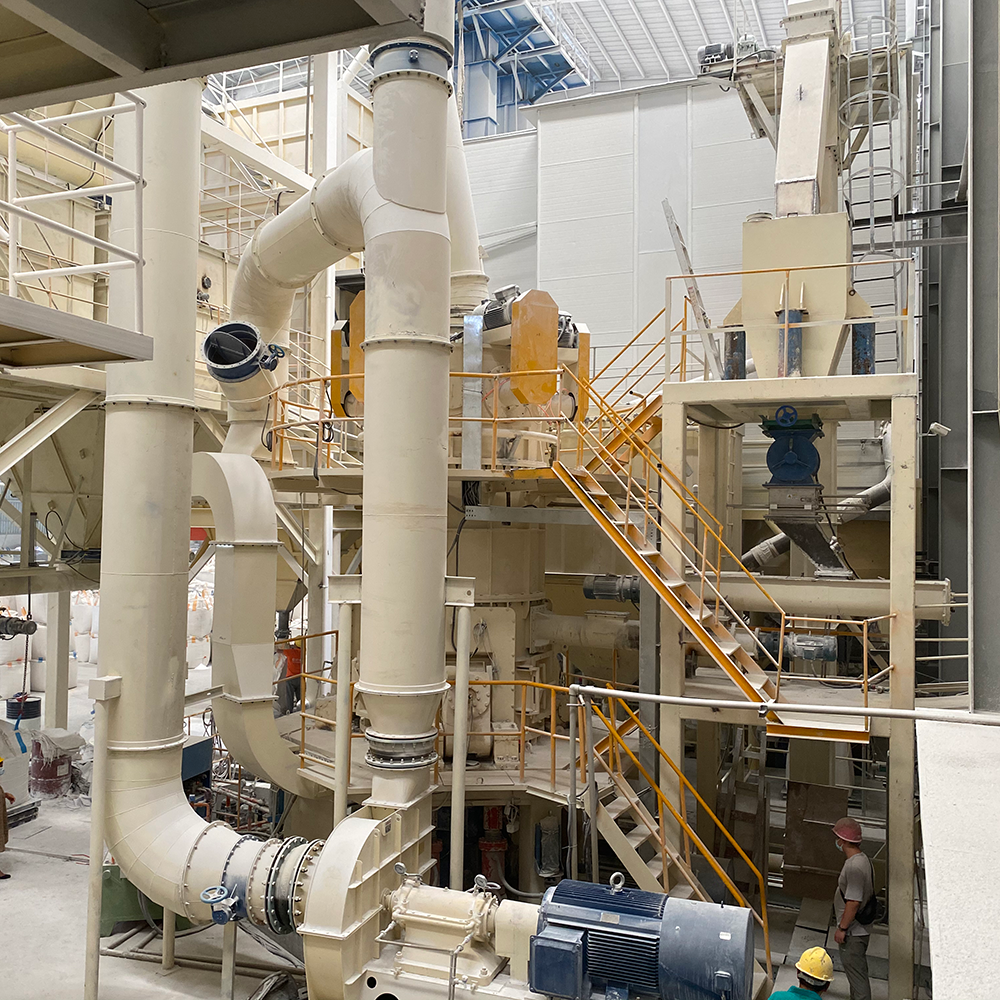
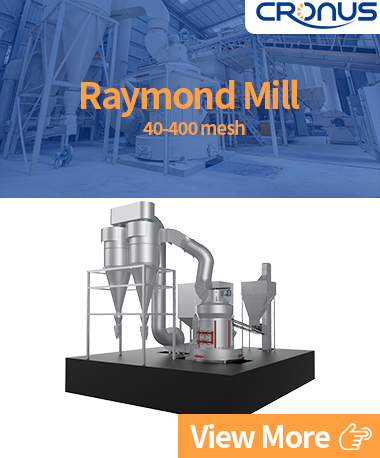
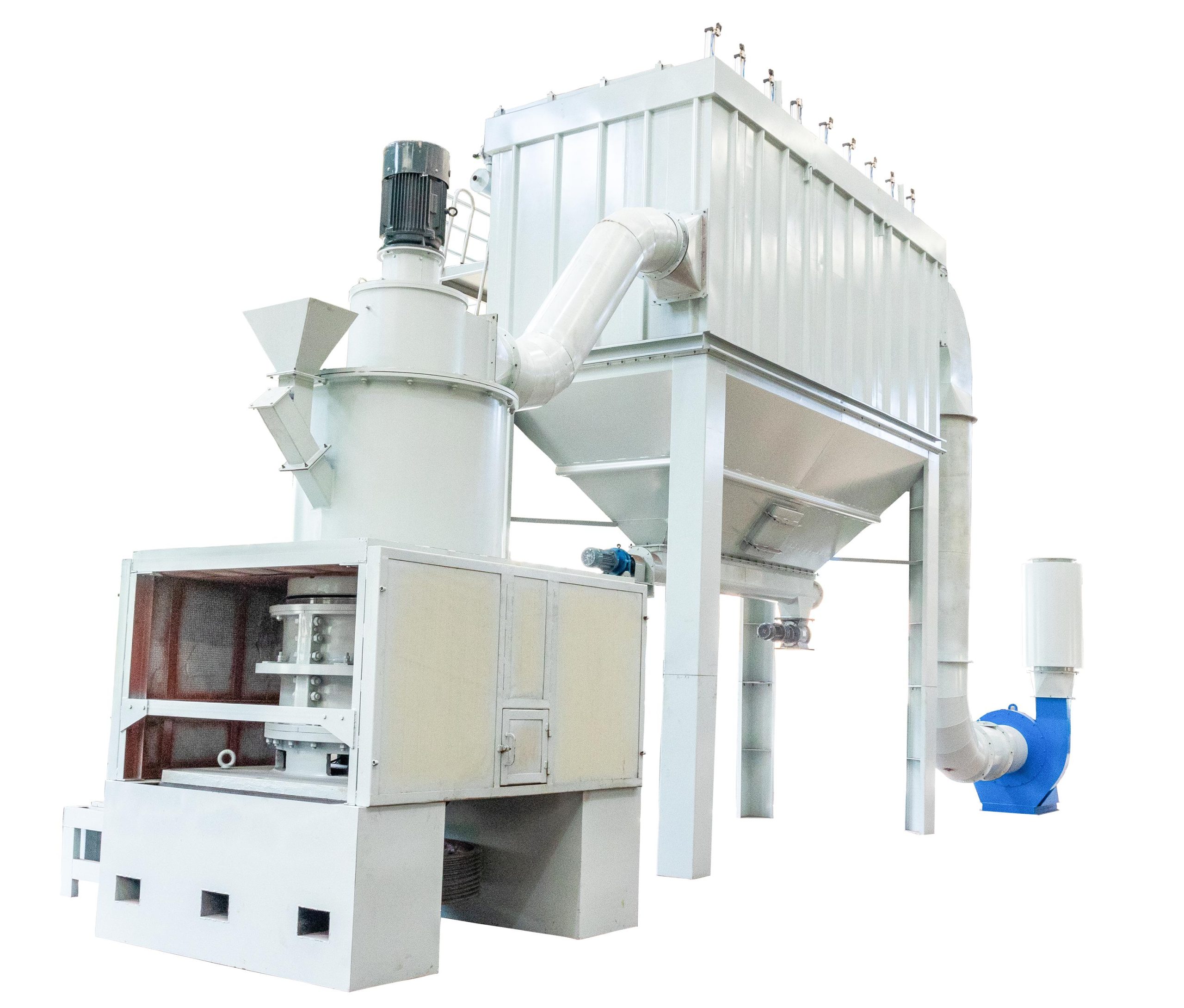
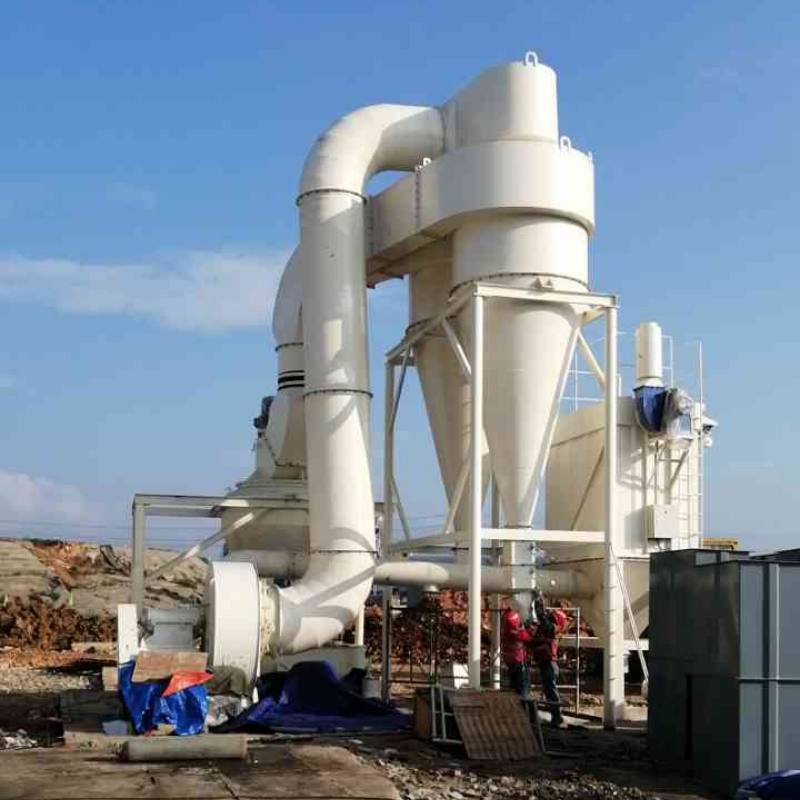
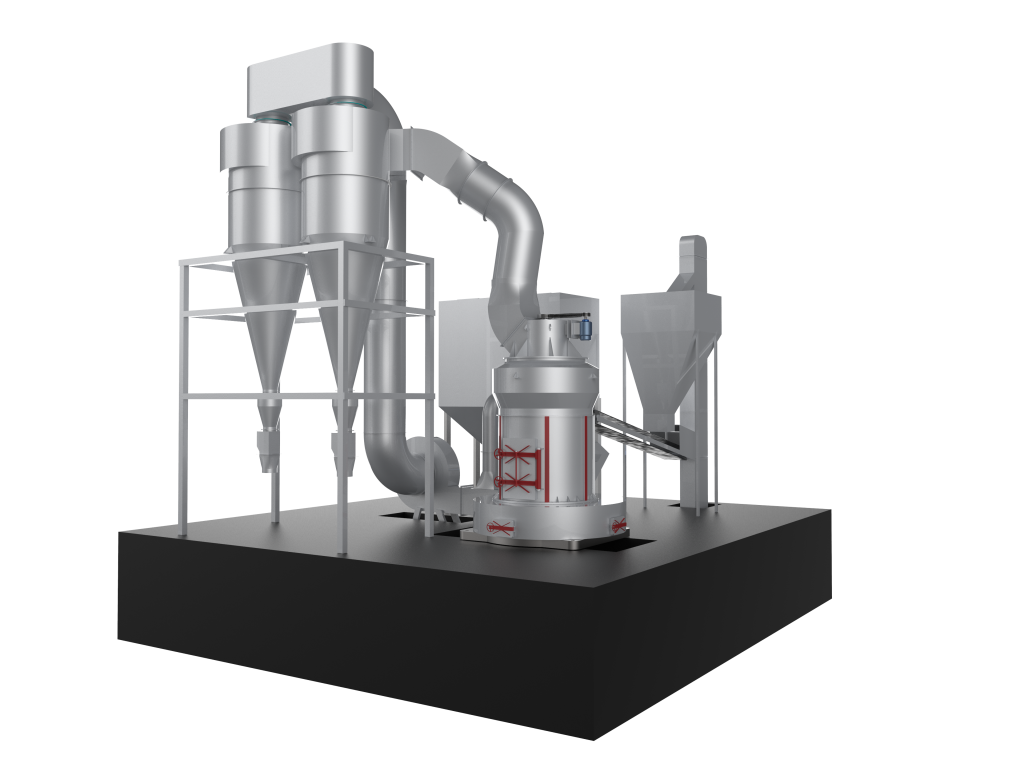
The Raymond mill is a classic centrifugal pressure grinding equipment, widely used in non-metallic mineral powder processing. Its complete structure includes vertical main unit, plum frame, material shovel, grinding ring, grinding roller assembly, powder classifier, induced draft fan and closed pipeline system.
Working Process of CRRM Raymond Mill
During normal operation, the grinding rollers fixed on the plum frame rotate with the main shaft. Under strong centrifugal force, the rollers tightly press against the fixed grinding ring and perform autorotation. Meanwhile, the high-speed rotating shovel continuously scoops up materials at the bottom of the host machine and throws them into the gap between grinding rollers and ring to form a uniform material layer.
After extrusion and fine grinding, qualified fine powder is carried upward by airflow to the top classifier. Standard fine powder passes through the classification wheel and enters the dust collection system, while unqualified coarse particles fall back to the grinding area for regrinding, forming an efficient closed-circuit grinding system.
The finished powder fineness and hourly output are determined by two core parameters: classifier rotation speed and system airflow volume. Higher classifier speed delivers finer powder; larger airflow improves material conveying efficiency and increases production capacity.
It is critical to match airflow and classifier speed in actual operation. Excessive airflow will cause coarse powder leakage and reduce finished product quality; insufficient airflow will lead to over-grinding, low output and accelerated wear of grinding rollers and rings. Reasonable parameter matching ensures high output while meeting fineness standards.
Working Principle of Vertical Mill
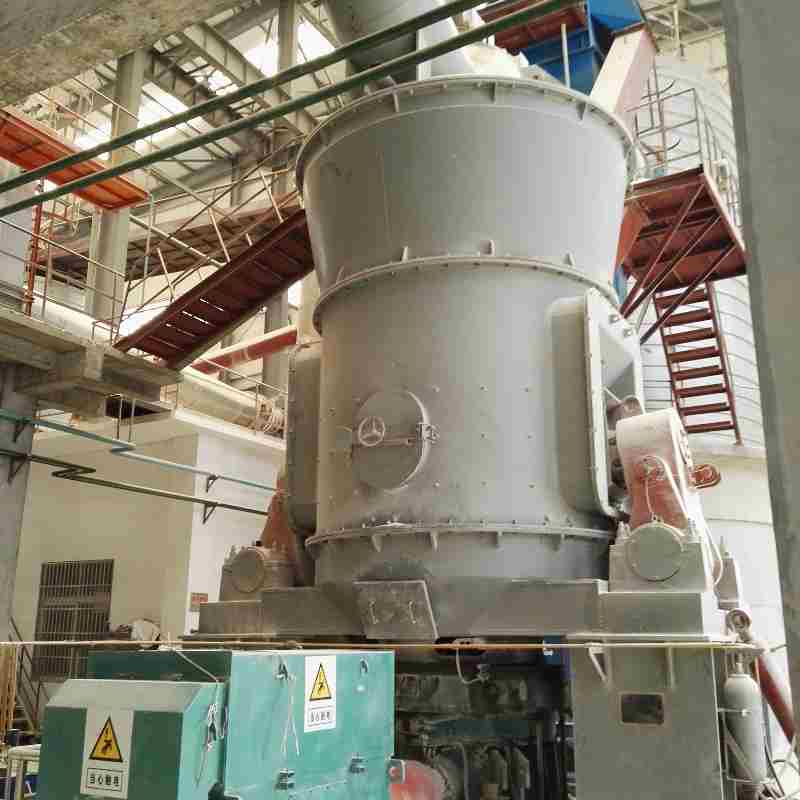
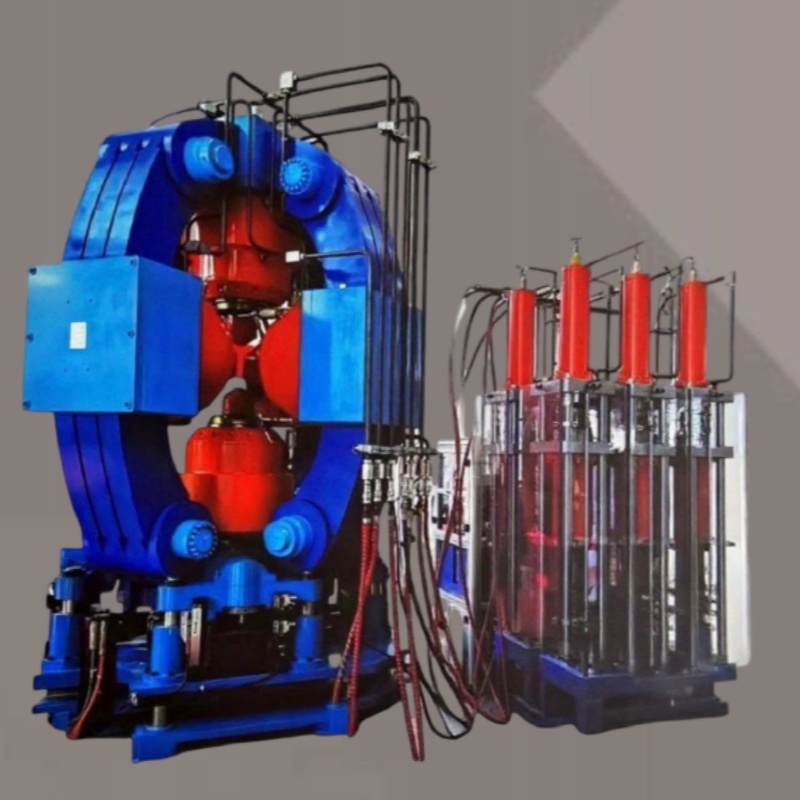
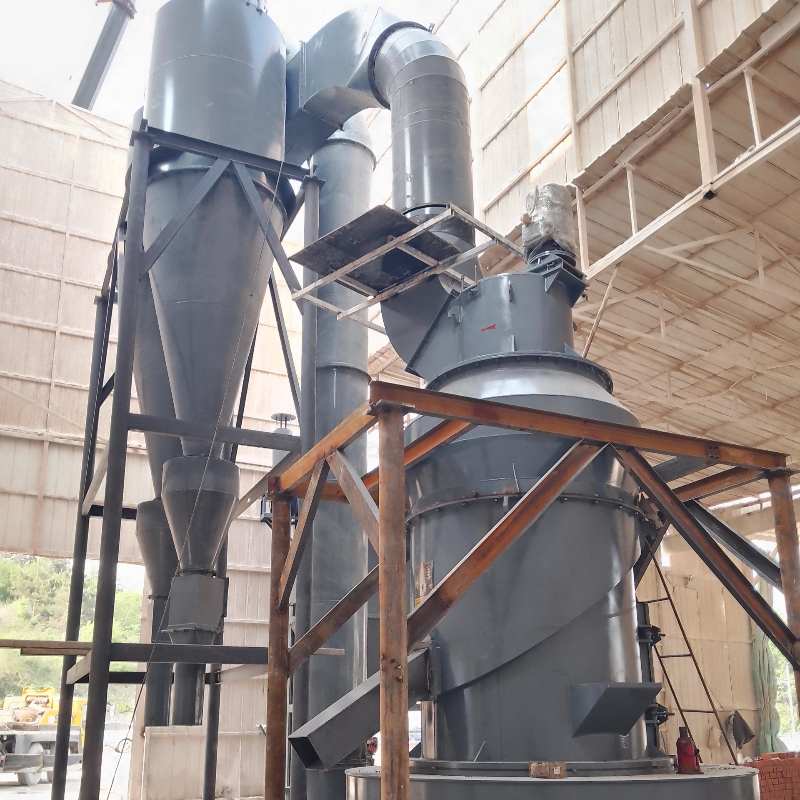
The vertical mill (vertical roller mill) is a multi-functional integrated grinding equipment with hydraulic constant-pressure material bed grinding technology, integrating drying, grinding, classifying and conveying functions. Its core components are grinding table, grinding roller, rocker arm device, hydraulic pressurization system, high-precision classifier, fan and pipeline system.
Working Process of GKLM Vertical Mill
Driven by the motor and reducer, the grinding table rotates stably. Raw materials fall into the center of the grinding table from the feeding port and move to the table edge under centrifugal force. The hydraulic system pushes the grinding rollers to press down on the material bed stably, and the rollers rotate by material friction to realize material extrusion and grinding. Notably, the grinding roller and table are non-contact, effectively avoiding metal wear.
While grinding, high-temperature hot air passing through the nozzle ring fully contacts with materials to complete drying. Fine powder is taken to the top classifier by hot airflow. Qualified fine powder enters the collection system, and unqualified coarse materials fall back for regrinding to form a closed-circuit circulation.
Vertical mill adjusts finished product fineness and output via classifier speed and airflow. Different from Raymond mill, its hot air temperature and airflow directly determine material drying efficiency. Stable production requires balancing hydraulic pressure, material bed thickness, airflow and classification parameters to ensure high output, qualified fineness and stable equipment operation.
Performance Indicator Comparison: Raymond Mill vs Vertical Mill
All comparison data is based on unified test conditions: calcite raw material (Mohs hardness 3), feeding particle size ≤25mm, finished product 200 mesh (D97 ≥90%). The data is for reference only; actual parameters vary with raw material properties and production processes. For customized parameters, please consult our technical team.
Energy Utilization Efficiency
Raymond Mill: The grinding roller and ring are in direct metal contact during operation, resulting in low energy utilization (5%~8%) and an over-grinding rate of up to 30%. When the fineness exceeds 325 mesh, power consumption rises exponentially. The unit power consumption for 400-mesh fine powder is over 40 kWh/t.
Vertical Mill: Non-contact grinding between roller and table reduces metal loss greatly. The energy utilization rate reaches 10%~15%, and the over-grinding rate is controlled within 15%. It saves 25%~30% energy compared with Raymond mill, with a low unit power consumption of 20~28 kWh/t, featuring significant energy-saving advantages.
Application Scale & Material Adaptability
Raymond Mill: Suitable for materials with Mohs hardness ≤7, with the best grinding effect for low and medium hardness materials (Mohs ≤4). It requires raw material moisture ≤6%, and supporting pre-drying equipment is mandatory for high-moisture materials. The allowable feeding particle size is ≤30mm, with a single-unit output of 0.3~35 t/h and an annual maximum capacity of 300,000 tons. It is mainly applicable to small and medium-sized powder processing projects, and large-capacity production requires multiple units working in parallel.
Vertical Mill: It has ultra-wide material adaptability, capable of processing materials with Mohs hardness ≤9.5. Equipped with integrated drying function, it can handle raw materials with moisture ≤15% (up to 25% with customized GKLM coarse powder vertical mill configuration) without auxiliary drying equipment. The feeding particle size is up to 50mm, with a single-unit output of 2~420 t/h and an annual capacity of over 2 million tons, which is the core equipment for large-scale industrial powder production.
Fineness & Powder Quality
Raymond Mill: Equipped with dynamic impeller classification system, the conventional finished powder fineness ranges from 80 to 400 mesh with uniform particle size distribution. With ultra-fine classifier or high-pressure suspension roller modification, the fineness can reach 600 mesh, but the output drops sharply above 400 mesh. Its efficient grinding interval is stably 80~400 mesh.
Vertical Mill: Adopts dynamic and static combined classification system (dynamic rotor + static guide vane), with a conventional fineness range of 80~600 mesh. It has higher classification precision and more concentrated particle size distribution than Raymond mill. The customized ultra-fine vertical mill can achieve a fineness of 2500 mesh, meeting high-end ultra-fine powder production demands.
Operation & Maintenance Cost
Raymond Mill: The biggest advantage is low initial investment cost, only 1/3 of the vertical mill. The service life of core wearing parts (grinding roller and ring) is 800~2500 hours, with single maintenance downtime of 4~8 hours. It has ultra-high cost performance for small and medium-scale production.
Vertical Mill: The upfront equipment investment is higher, but it has outstanding advantages in long-term operation. It saves 25%~30% energy annually, and the roller tyre is reversible for secondary use. The service life of roller tyres and table liners reaches 6000~12000 hours. Its unit output operation and maintenance cost is only 30%~50% of Raymond mill, with annual maintenance downtime reduced by more than 70%, bringing high long-term return on investment.
Optimal Application Scenarios: Raymond Mill vs Vertical Mill
There is no one-size-fits-all better grinding mill. Scientific equipment selection should match production scale, material characteristics and powder quality requirements to maximize production efficiency and economic benefits.
Best Application Scenarios for Raymond Mill
Production Scale: Small and medium-sized projects with annual capacity ≤100,000 tons and rated output ≤5 t/h, as well as pilot production lines and temporary processing projects.
Material Adaptation: Dry low & medium hardness non-metallic minerals (Mohs ≤4, moisture ≤6%), such as limestone, calcite, dolomite and other conventional building materials.
Quality Requirements: Ordinary powder products with no strict requirements on particle size distribution and purity, including construction powder, common building material additives, etc.
Project Attributes: Budget-limited small and medium-sized enterprises, pursuing short investment payback period and limited site space.
Best Application Scenarios for Vertical Mill
Production Scale: Medium and large-scale industrial projects with annual capacity ≥100,000 tons and rated output ≥5 t/h, requiring long-term continuous and stable production.
Material Adaptation: Medium & high hardness, high-abrasive materials (Mohs ≥4) or high-moisture raw materials (moisture ≥6%), such as slag, steel slag, cement clinker and raw meal.
Quality Requirements: High-end fine and ultra-fine powder with strict standards for particle size, whiteness, purity and yield, applicable to plastic fillers, coating, papermaking, rubber and high-end building materials industries.
Project Attributes: Large enterprises and group projects with sufficient funds, focusing on long-term operation cost control and sustainable investment returns.
Scenario Comparison Table
| Application Scenario | Raymond Mill | Vertical Mill |
| Small & Medium-Scale Production | Low investment, fast payback, high cost performance | High initial cost, risk of capacity idle |
| Large-Scale Production (≥300,000 tons/year) | Limited single-unit output, multiple units required | High single-unit capacity, low energy consumption |
| 80-400 Mesh Low & Medium Hardness Materials | Efficient and professional grinding range | Performance surplus, higher investment cost |
| High Hardness Materials (Mohs >7) | Severe wear, frequent parts replacement | Low wear, long service life of wearing parts |
| High Moisture Materials (>6%) | Additional pre-drying equipment required | Integrated drying function, strong adaptability |
| 400-2500 Mesh Ultra-Fine Powder | Fineness limited, low output for ultra-fine powder | Support ultra-fine grinding, high classification precision |
Frequently Asked Questions (FAQ)
Which is better: multi-unit parallel Raymond mills or single vertical mill?
Multi-unit Parallel Raymond Mills: Low investment threshold and high fault tolerance. It supports phased investment; if one unit fails, others can operate normally to avoid production shutdown. It can produce multiple specifications of powder simultaneously, meeting small-batch and diversified order demands. The only shortcoming is the complex process system, which requires cooperation with professional manufacturers.
Single Vertical Mill: High initial investment, but simple daily maintenance, low energy consumption and excellent long-term benefits. The equipment is highly integrated with small floor space, saving workshop construction and steel structure investment costs. It is the preferred choice for long-term large-scale industrial production.
Which equipment is more durable, Raymond mill or vertical mill?
Raymond Mill: Suitable for materials with Mohs hardness ≤4. When processing materials with hardness >7, the wear speed increases sharply. The service life of core grinding rollers and rings is only 800~2500 hours.
Vertical Mill: Adaptable to materials with Mohs hardness up to 9.5. The reversible roller tyre has a service life of 6000~12000 hours, with far lower wear rate and higher durability than Raymond mill.
What is the maximum fineness of Raymond mill and vertical mill?
Raymond Mill: The stable and efficient fineness range is 80~400 mesh. Special modified configurations can reach 600 mesh, but the production capacity will drop significantly.
Vertical Mill: Standard vertical mill supports 80~600 mesh grinding. Custom ultra-fine vertical mill can achieve 2500 mesh ultra-fine powder production, with more uniform and stable powder quality.Conclusion
In summary, Raymond mill and vertical mill have their unique advantages in powder processing. Forsmall-scale, low-moisture, medium-low hardness mineral processing, Raymond mill with low investment and high cost performance is the first choice. For large-scale, high-moisture, high-hardness material and ultra-fine powder production, vertical mill with energy saving, high efficiency and stable operation is more suitable. Enterprises can select targeted grinding equipment according to actual production conditions to optimize production benefits.